Jacks or Better paytables: the two numbers that set your return
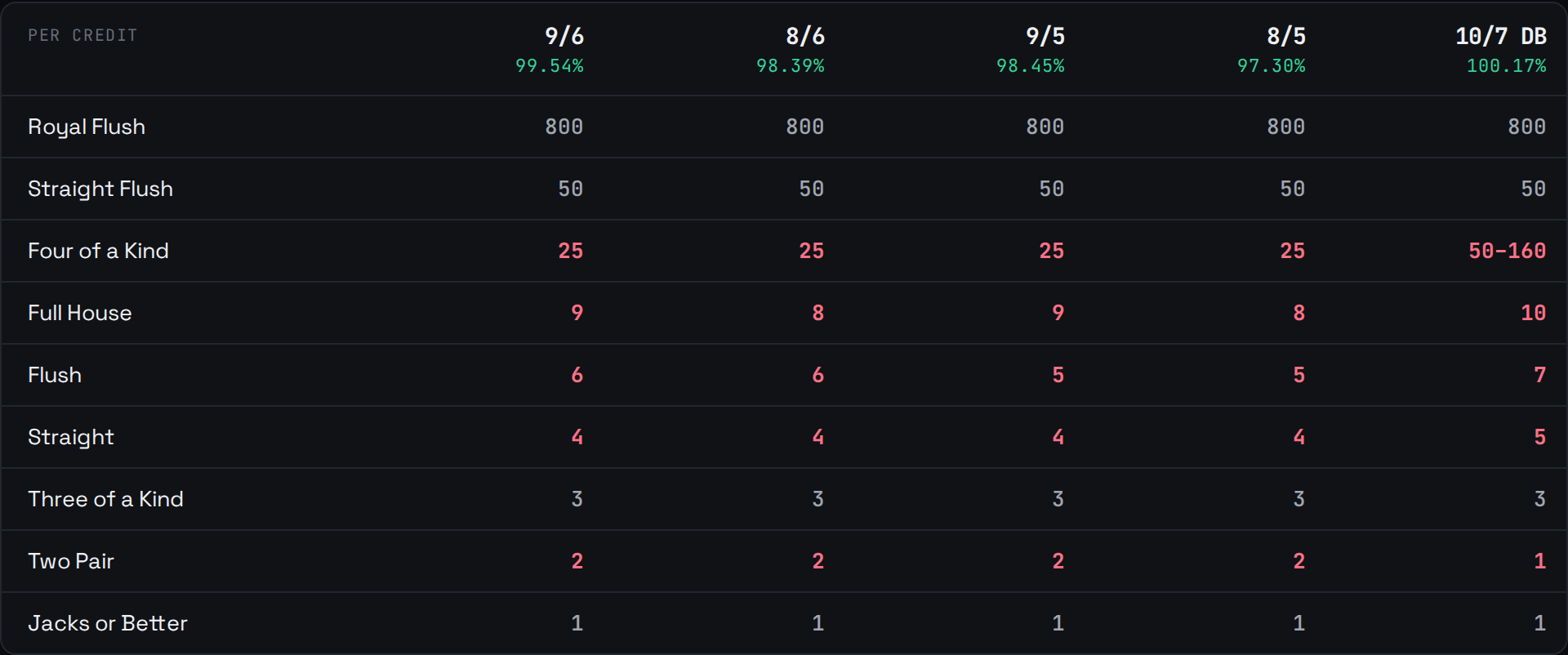
Two machines side by side can look identical and pay 2% apart. The difference is printed on the glass: the full house and flush payouts per coin — that's the “9/6” in “9/6 Jacks or Better”.
The four common paytables
Returns assume optimal play at max bet (the royal pays 800-per-coin only at five coins — always bet five, or the best paytable in the house can’t save you). The five-second check: find the full house and flush rows on the glass, read the 1-coin column. 9 and 6? Sit down. 8 and 5? Keep walking — that machine costs about $22 per $1,000 of play more than the identical-looking 9/6 across the aisle.
Does the strategy change on the worse paytables?
Barely — and that’s a trap in both directions. The correct plays on 8/6 are nearly identical to 9/6 (flush-related draws shift marginally on 9/5 and 8/5), so learning the 9/6 Simple+ chart covers you everywhere. But no strategy can win back a bad paytable: game selection is worth more than the last 0.04% of playing skill. Master both — pick the machine first, then play it perfectly.
See the difference on a real hand
The same deal solves differently as payouts change. The trainer and analyzer both run an exact solver, so you can check any hand on any of these paytables — free, in your browser.
Open the hand analyzer →Related: what the simple strategy really costs · video poker vs slots · the classic dilemmas, answered exactly · how to play, from zero.